Note: if images don't appear please enable "display / load images" in your email program.  Issue #570 • October, 5 2026 Greetings , Welcome to this week's Advisor Training newsletter. Our goal is to provide training, education and insights for solo/independent Advisors who adhere to our client-first, counter-cultural, and sometimes counter-intuitive investment and business philosophy. If you're not yet part of our AdvisorFirst Group but you'd like to learn more, you can schedule a chat with me. 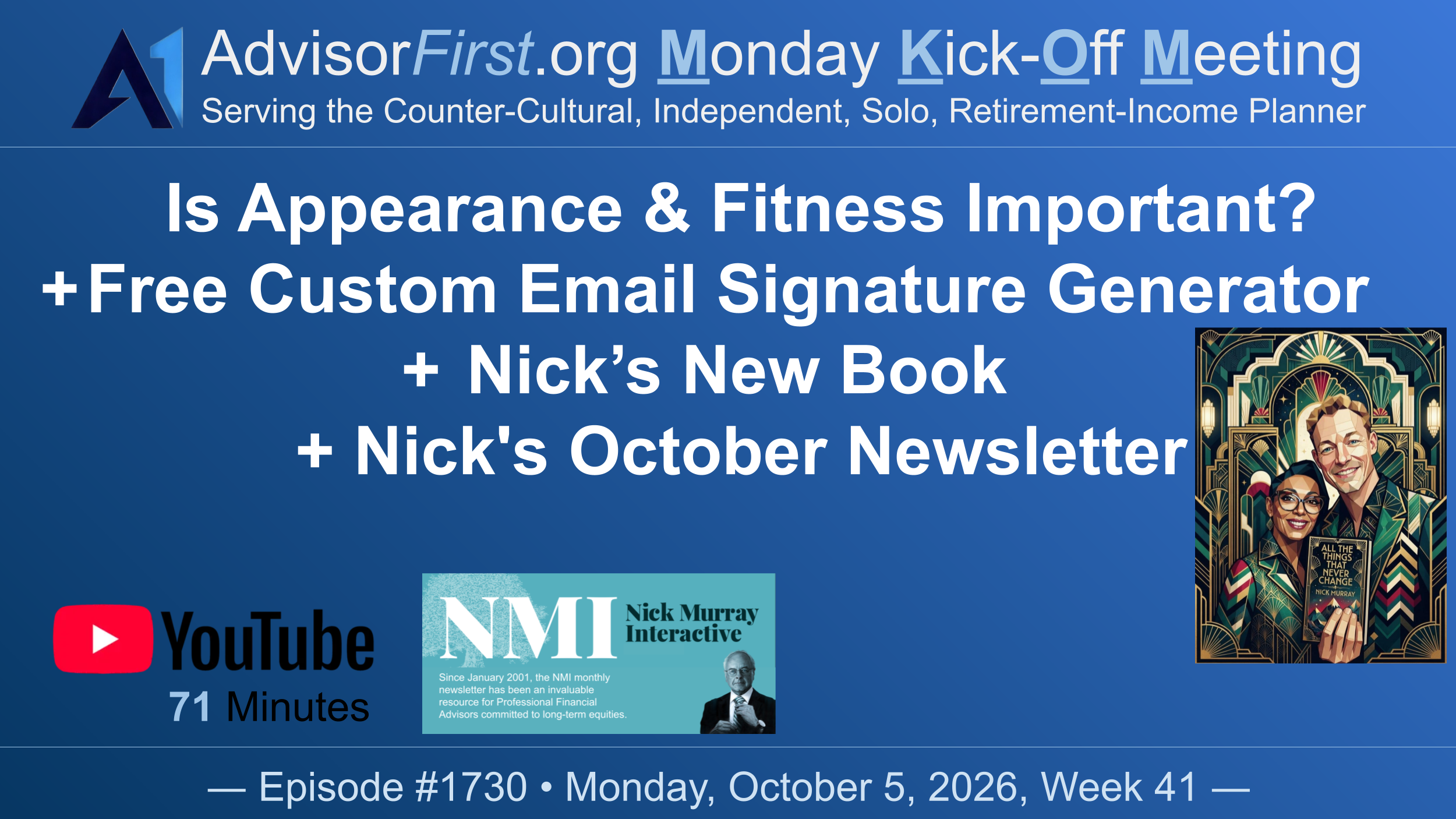  October 2026 • 8-Page PDF The human tragedy of September 11, 2001 – with the sharp market panic that ensued – was only one of the serial disasters that befell the economy and the markets between the spring of 2000 and the autumn of 2002.
Twenty-five years later, however, 9/11 is quite properly seared into our collective memory, such that the chain of dire events before and after may not be readily recalled. But in fact the 929 days on either side of 9/11 encompass not just the deepest market decline (to that time) since the 1929-32 event, but by far (and to this day) the longest peak-to-trough liquidation since 1950.
I’ve chosen to write about the quarter century between the market’s panic trough after 9/11 and virtually the same date in 2026. It is to me a perfect laboratory for the study of American resilience on every level. In the specific context of what you and I do, it’s as eloquent as any anecdotal evidence can be with respect to the ironbound long-term relationship between corporate earnings and equity values. Secondarily, it is powerful testimony to the way mainstream dividend income growth far outpaces consumer inflation. This Week's Pro-Tip Learn the difference between the two and when to use which.     Last Week's QuizGenerally speaking, what is the preferred sequence to fund the following tax-advantaged accounts?
Answer = Choice 5: 1. 401k up-to match. 2. IRA. 3. 401k remainder. 4. Variable Annuity. Business MemesClick to enlarge images
|